

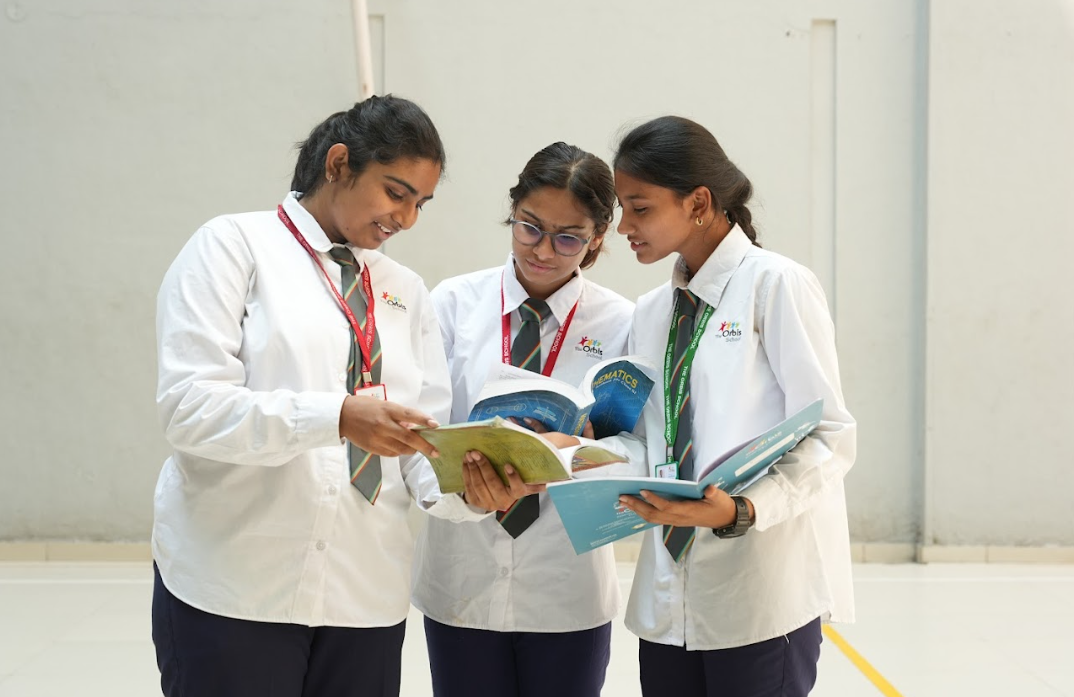
Class 12 Board Exam Revision Tips | Smart Study Techniques for Better Retention
Class 12 board exams can feel like the most important milestone of your school life — and honestly, they are. These marks influence college admissions, career paths, and sometimes even confidence levels.
But here’s the truth most toppers won’t tell you: studying longer is not the same as studying smarter. What truly matters is retention — how much you actually remember when you sit in the exam hall.
Let’s explore practical, science-backed revision techniques that actually improve memory and performance.
1. Active Recall — Stop Just Reading, Start Remembering
Most students reread textbooks repeatedly, thinking it helps. It doesn’t — at least not significantly.
Active recall means forcing your brain to retrieve information without looking at the answer.
Try this:
- Close the book and write everything you remember.
- Solve questions without peeking at solutions.
- Teach the concept aloud as if explaining it to a friend.
When your brain works to retrieve information, it strengthens memory pathways.
2. Spaced Repetition — Revise Before You Forget
Cramming the night before is stressful and ineffective. Instead, revise topics at increasing intervals.
Follow this simple pattern:
- Day 1 — Learn the topic
- Day 2 — Quick revision
- Day 5 — Revise again
- Day 10 — Test yourself
- Day 20 — Final revision
Spaced repetition prevents last-minute panic and improves long-term retention.
3. Practice Writing, Not Just Thinking
Board exams are written exams. You may know the answer but still lose marks if you cannot present it well.
Make this a habit:
- Solve previous years’ question papers.
- Time yourself strictly.
- Practice diagrams, maps, and stepwise solutions.
- Focus on handwriting clarity and answer structure.
Presentation matters — especially in theory subjects.
4. The Blurting Technique
Study a topic carefully. Then:
- Close the book.
- Write everything you remember on a blank page.
- Check what you missed.
- Repeat.
This method quickly identifies weak areas and strengthens recall.
5. Focus on NCERT First
For CBSE board exams, NCERT textbooks are the backbone.
Before touching reference books:
- Understand every line.
- Solve all in-text and back-exercise questions.
- Revise diagrams and definitions thoroughly.
Strong NCERT preparation builds a solid foundation.
6. Interleaving — Mix Subjects Smartly
Studying one subject for long hours reduces efficiency and increases fatigue.
Instead:
- Rotate between subjects.
- Combine theory and problem-solving subjects.
- Keep sessions focused and balanced.
This keeps the brain engaged and improves adaptability.
7. Sleep Is a Memory Booster
Sleep is not wasted time. During sleep, your brain consolidates what you learned during the day.
Students who sleep 7–8 hours regularly perform better than those who sacrifice sleep for late-night study sessions.
8. Manage Stress to Protect Memory
An anxious brain struggles to recall information clearly.
To reduce stress:
- Take short walks.
- Practice deep breathing.
- Limit social media.
- Talk to family or mentors when overwhelmed.
A calm mind remembers better.
9. Create a Realistic Revision Plan
A smart plan includes:
- Daily revision slots.
- Weekly reviews.
- Practice tests.
- Buffer time for weak topics.
Avoid unrealistic schedules. Consistency beats intensity.
Final Thoughts
Class 12 board exams are not just about hard work — they are about effective learning habits.
Techniques like:
- Active recall
- Spaced repetition
- Writing practice
- Proper sleep
can dramatically improve retention and performance.
You don’t need to study 16 hours a day.
You need to study in a way your brain actually remembers.
📞 Need expert guidance for Class 12 board exam preparation? Contact us today to support your academic journey.
Archives
- Dec 2020 (1)
- Jan 2021 (4)
- Mar 2021 (2)
- Apr 2021 (3)
- May 2021 (3)
- Jun 2021 (1)
- Jul 2021 (2)
- Aug 2021 (3)
- May 2022 (1)
- Aug 2022 (2)
- Sep 2022 (1)
- Oct 2022 (2)
- Apr 2023 (2)
- Jul 2023 (1)
- Aug 2023 (2)
- Sep 2023 (2)
- Dec 2023 (3)
- Jan 2024 (2)
- Feb 2024 (5)
- Mar 2024 (4)
- Apr 2024 (4)
- May 2024 (3)
- Jun 2024 (3)
- Jul 2024 (4)
- Aug 2024 (4)
- Sep 2024 (4)
- Oct 2024 (5)
- Nov 2024 (4)
- Dec 2024 (4)
- Jan 2025 (3)
- Feb 2025 (3)
- Mar 2025 (3)
- Apr 2025 (4)
- May 2025 (3)
- Jun 2025 (4)
- Jul 2025 (4)
- Aug 2025 (3)
- Sep 2025 (4)
- Oct 2025 (3)
- Nov 2025 (4)
- Dec 2025 (3)
- Jan 2026 (4)
- Feb 2026 (3)
- Mar 2026 (3)
- Apr 2026 (3)
- May 2026 (5)
- Jun 2026 (3)
- Jul 2026 (4)
- Aug 2026 (4)
- Sep 2026 (3)
