

Early Childhood Development at The Orbis School | Building Skills for Life
Early childhood is one of the most crucial stages in a child’s life, as it lays the foundation for lifelong learning and overall development. During these formative years, children rapidly develop cognitive abilities, emotional understanding, social skills, and physical coordination. At Orbis ECCDC, early childhood development is approached with a holistic perspective, ensuring that every aspect of a child’s growth is nurtured effectively.
Rather than focusing solely on academic achievement, the programme emphasises building essential life skills that prepare children for both school and real-world experiences. This balanced approach helps children become confident, capable, and independent learners.
Want to give your child a strong start in life? Connect with The Orbis School ECCDC team today at +91-86868 60290 to learn more about our early childhood programmes.
Key Areas of Development
At Orbis ECCDC, development is centred around four key areas:
- Cognitive Development: Children are encouraged to think, question, and solve problems. Activities are designed to stimulate curiosity and develop critical thinking skills.
- Emotional Development: Understanding and managing emotions is a vital skill. Children learn to express their feelings and develop self-awareness and confidence.
- Social Development: Interaction with peers helps children build communication skills, cooperation, and respect for others.
- Physical Development: Activities that involve movement help improve coordination, balance, and motor skills.
By integrating these areas into daily learning, ECCDC ensures a well-rounded developmental experience.
Role of ECCDC in Learning
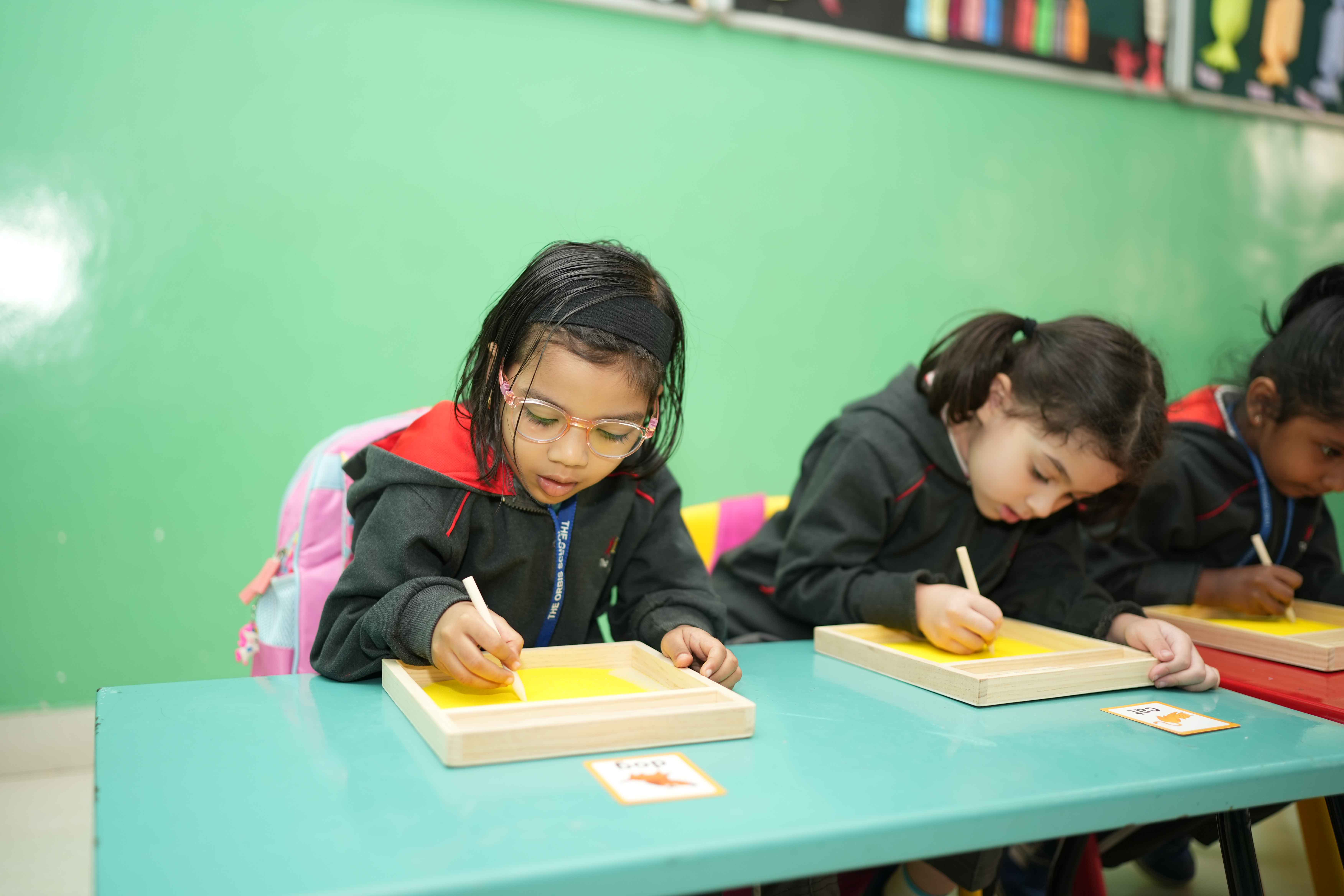
The ECCDC at Orbis provides a structured yet flexible environment where children learn through exploration and experience. The teaching approach is child-centric, meaning that each child’s interests, pace, and learning style are taken into consideration.
Teachers act as facilitators, guiding children rather than simply instructing them. This encourages children to actively participate in the learning process, ask questions, and express their ideas confidently.
The use of inquiry-based and play-based learning methods ensures that children understand concepts through hands-on experiences rather than memorisation. This not only improves retention but also makes learning enjoyable and meaningful.
Activities and Learning Outcomes
A variety of activities are incorporated into daily routines to support development across all areas.
For example, storytelling sessions encourage children to predict outcomes, discuss characters, and express their thoughts. This enhances imagination, language skills, and critical thinking. Similarly, group activities such as building structures with blocks help children develop teamwork, problem-solving skills, and spatial awareness.
Art, music, and movement activities further contribute to creativity and self-expression. These experiences allow children to explore different ways of learning and communicating.
As a result of these activities, children develop confidence in expressing themselves, improve their communication skills, and become more independent learners. They also learn to collaborate with others, share ideas, and respect different perspectives.
Conclusion
Early childhood development at Orbis ECCDC is designed to build a strong foundation for life. By focusing on holistic growth and experiential learning, the program equips children with essential skills that go beyond academics. It prepares them to adapt, think independently, and succeed in both their educational journey and everyday life.
Archives
- Dec 2020 (1)
- Jan 2021 (4)
- Mar 2021 (2)
- Apr 2021 (3)
- May 2021 (3)
- Jun 2021 (1)
- Jul 2021 (2)
- Aug 2021 (3)
- May 2022 (1)
- Aug 2022 (2)
- Sep 2022 (1)
- Oct 2022 (2)
- Apr 2023 (2)
- Jul 2023 (1)
- Aug 2023 (2)
- Sep 2023 (2)
- Dec 2023 (3)
- Jan 2024 (2)
- Feb 2024 (5)
- Mar 2024 (4)
- Apr 2024 (4)
- May 2024 (3)
- Jun 2024 (3)
- Jul 2024 (4)
- Aug 2024 (4)
- Sep 2024 (4)
- Oct 2024 (5)
- Nov 2024 (4)
- Dec 2024 (4)
- Jan 2025 (3)
- Feb 2025 (3)
- Mar 2025 (3)
- Apr 2025 (4)
- May 2025 (3)
- Jun 2025 (4)
- Jul 2025 (4)
- Aug 2025 (3)
- Sep 2025 (4)
- Oct 2025 (3)
- Nov 2025 (4)
- Dec 2025 (3)
- Jan 2026 (4)
- Feb 2026 (3)
- Mar 2026 (3)
- Apr 2026 (3)
- May 2026 (5)
- Jun 2026 (3)
- Jul 2026 (4)
- Aug 2026 (4)
- Sep 2026 (3)
